
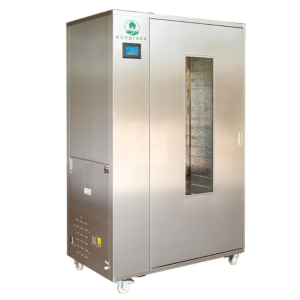
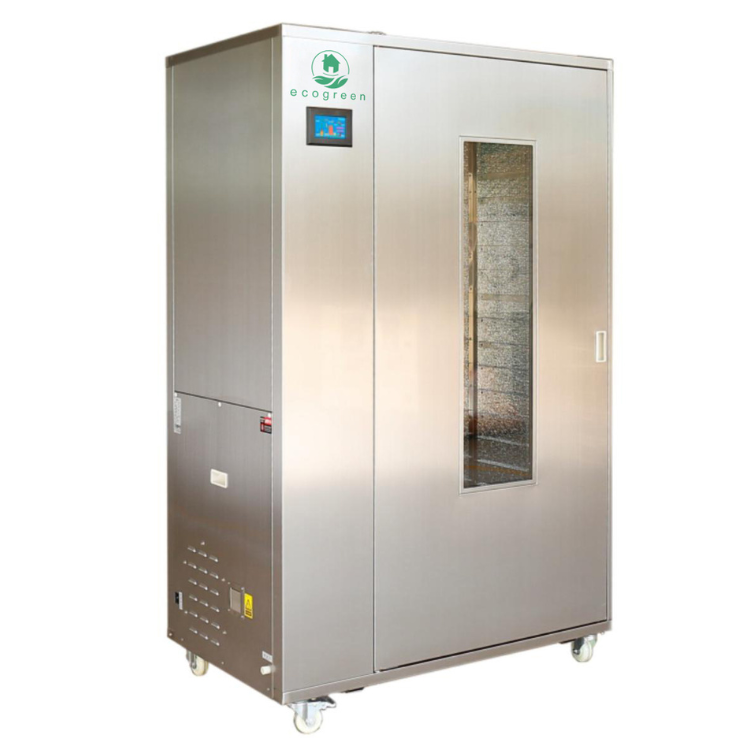
What Is the ecogreen WRH-100B Heat Pump Dehydrator?
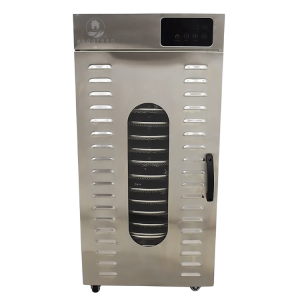
The Ecogreen WRH-100B Heat Pump Dehydrator is a professional stainless steel food drying machine designed for small to medium-scale commercial food processing, agricultural businesses, restaurants, spice traders, and entrepreneurs across NepalWhat makes this machine stand out from ordinary dryers on the market is its use of closed-loop heat pump technology. Instead of simply blowing hot air through food and wasting energy, the ecogreen WRH-100B recycles the energy generated inside the system — dramatically cutting down on electricity usage while maintaining consistent drying conditions throughout every batch.
How Does the WRH-100B Heat Pump Dehydrator Work?
Understanding how this machine works will help you appreciate why it performs so much better than conventional electric ovens or basic hot-air dryers. The working principle behind the ecogreen WRH-100B is both elegant and scientifically sound.
1. The closed-loop dehumidification cycle
Most people assume that drying food is simply about applying heat. In reality, the key to effective drying is not temperature alone — it is controlling the relative humidity inside the drying chamber. Once you reduce the relative humidity within the enclosed space, moisture naturally migrates from the food into the air. The ecogreen WRH-100B exploits this principle through what IKE calls a Closed Cycle system.
Here is how the cycle works step by step:
- Warm, moist air from inside the drying chamber is drawn into the heat pump unit.
- The evaporator in the heat pump cools this moist air, causing the moisture to condense and drain away as water.
- The now-dry, cool air passes over the condenser and is reheated to the target drying temperature.
- This warm, dry air is circulated back into the drying chamber to continue removing moisture from the food.
- The cycle repeats continuously until the desired moisture content is achieved.
Because the heat is recycled within the closed loop rather than vented to the outside, energy consumption drops dramatically compared to traditional hot-air dryers. The machine essentially reuses the energy it generates — which is why users often report electricity savings of 30% to 50% compared to conventional electric drying equipment.
This is fundamentally different from a conventional oven or basic drying cabinet, which simply heats air, blows it through the food, and exhausts the warm moist air to the outside — wasting all that thermal energy in the process. The ecogreen WRH-100B‘s approach is smarter, cleaner, and far more economical in the long run.
2. Uniform airflow and consistent results
Another critical advantage of the closed-loop system is uniformity. Because the conditioned air is circulated evenly throughout the stainless steel cabinet, every tray receives the same drying conditions. This eliminates the common problem with cheaper dryers where trays near the heating element dry faster than those further away, resulting in inconsistently dried batches where some product is over-dried and some is still moist.
For export-quality food production, this consistency is not just a nice-to-have — it is essential. Buyers in international markets expect uniform color, texture, and moisture content. The ecogreen WRH-100B delivers exactly that, batch after batch.
Who Is the ecogreen WRH-100B For?
One of the most impressive things about the WRH-100B heat pump dehydrator is the sheer range of users and applications it serves. In the Nepali context, this machine is relevant for a surprisingly wide audience:
1. Farmers & Agricultural Cooperatives
Nepal’s agricultural sector is highly productive, but post-harvest losses remain a major problem. Fruits and vegetables that cannot reach urban markets in time simply rot. With the ecogreen WRH-100B, farmers can dry their surplus produce — tomatoes, chilies, ginger, turmeric, mushrooms, green onions, and more — and store or sell them at a significantly higher price. Drying extends shelf life from days to months and adds real value to the raw product.
Agricultural cooperatives can pool resources to purchase a single machine and share it among members, making the investment even more cost-effective for communities.
2. Herb and spice processors
Nepal produces some of the world’s most prized herbs and spices — Timur (Szechuan pepper), Jimbu, Yarsagumba, Chiuri, various medicinal plants, and dozens of high-altitude herbs. The WRH-100B’s medium-temperature range is especially gentle on aromatic compounds, helping preserve the essential oils, color, and fragrance that make Nepali herbs so valuable in both domestic and international markets.
3. Meat and fish producers
Traditional dried meats like Sukuti (dried buff or goat meat) are deeply embedded in Nepali food culture. The WRH-100B can produce Sukuti, dried fish, and sausages at a consistent quality level that is difficult to achieve through sun drying. Hygienic, controlled drying also reduces the risk of contamination — an increasingly important factor as Nepal’s food safety standards rise.
4. Hotels, restaurants, and food businesses
Hotels and restaurants looking to offer artisanal dried food products, homemade snacks, or preserved ingredients will find the WRH-100B perfectly sized for their needs. At up to 100 kg per batch, it is capable enough for commercial production while compact enough to fit in a back kitchen or small processing room.
5. Food startups and export-oriented producers
Nepal’s export food sector is growing rapidly. Dried fruits, trail mix, herbal teas, and dehydrated vegetable snacks all have strong export potential. The WRH-100B produces the uniform, export-grade quality that international buyers demand. Paired with good packaging, produce dried on the WRH-100B can compete in premium markets in India, China, and beyond.
Key Features and Benefits
Let us look more closely at the specific features that make this energy efficient food dryer stand out in the Nepali market:
1. Closed-loop heat pump technology:
Recycles energy within the system, delivering 30–50% energy savings compared to conventional electric dryers. This is the defining feature that separates the WRH-100B from cheaper alternatives.
2. Stainless steel construction:
The entire interior, including the trays and cabinet walls, is made from food-grade stainless steel. This ensures hygiene, ease of cleaning, and long-term durability even in humid Nepali conditions.
3. Precise temperature and humidity control:
The digital controller allows you to set exact drying parameters — temperature, humidity, and time — ensuring repeatable results for every product and every batch.
4. Wide product compatibility:
Fruits, vegetables, herbs, spices, meat, fish, mushrooms, medicinal plants, tea leaves, and more — if it needs to be dried, the ecogreen WRH-100B can handle it.
5. Odor-free operation:
The closed-loop system means no odors or steam are vented to the surrounding environment. This is a major advantage in indoor processing facilities.
6. Simple installation:
The ecogreen WRH-100B simply needs to be connected to a standard 220V power supply. No complex installation, no special infrastructure, no plumbing connections required.
7. Removable and mobile:
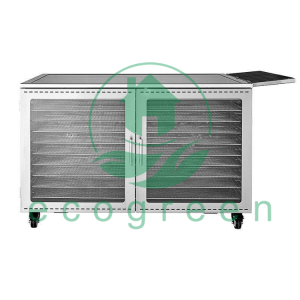
The cabinet is mounted on caster wheels, making it easy to reposition within a facility. The trays are also easily removable for loading, unloading, and cleaning.
ecogreen WRH-100B vs. Alternative Drying Methods in Nepal
To really appreciate the value of this commercial food dryer, it helps to compare it against the alternatives that most Nepali food producers currently use.
1. Sun drying:
Sun drying is the oldest and most common drying method in Nepal. It costs nothing to operate and requires no electricity — but it comes with serious limitations. It is entirely dependent on weather, which is unreliable, especially during monsoon. Products dried in the open are exposed to dust, insects, birds, and contamination. Drying times are inconsistent, and there is no control over temperature or humidity. The result is variable product quality that is difficult to maintain batch to batch.
The ecogreen WRH-100B eliminates all of these problems. Drying happens indoors, in a controlled environment, rain or shine, 365 days a year.
2. Conventional electric ovens or hot-air dryers:
Electric ovens and basic hot-air drying cabinets are more reliable than sun drying, but they are expensive to run. They consume large amounts of electricity because all the thermal energy generated is eventually lost to the environment. They also struggle to maintain uniform drying conditions across all trays, leading to inconsistent results.
The ecogreen WRH-100B‘s heat pump technology recycles energy, making it significantly cheaper to operate per kilogram of dried product. Over time, the energy savings more than compensate for the higher upfront investment compared to a basic electric dryer.
3. Industrial tunnel dryers:
Large tunnel or conveyor dryers are used in high-volume industrial settings, but they are far too large and expensive for most small and medium food processors in Nepal. They require significant floor space, high capital investment, and ongoing industrial maintenance.
The ecogreen WRH-100B fills the gap perfectly — it delivers commercial-grade drying quality and consistency in a compact, affordable format that is within reach for small businesses, cooperatives, and individual entrepreneurs.
Why Buy the ecogreen WRH-100B from Nepal Eco Green?
You might wonder whether you could source a ecogreen WRH-100B directly from China or through other channels. Here is why buying through ecogreen Nepal — the official distributor — is the smarter choice:
1. Local installation support:
Nepal ecogreen provides on-site installation assistance and technical support across Nepal. Setting up the machine correctly from day one ensures optimal performance.
2. After-sales service:
The company has over a decade of experience servicing energy-efficient equipment in Nepal. When you have a question or need maintenance, you are dealing with a local team that understands Nepal’s power supply conditions, climate, and usage patterns.
3. Genuine warranty coverage:
Purchasing through the authorized distributor ensures your 2-year warranty is valid and enforceable. A machine sourced through unofficial channels may not have warranty support.
4. Expert consultation:
Nepal ecogreen’s team can advise you on the right machine for your specific product, volume, and business goals. They have helped hundreds of Nepali businesses optimize their food processing operations.
Practical Tips for Getting the Most Out of Your ecogreen WRH-100B
Owning a commercial food dryer is just the first step. Here are some practical tips to ensure you get the best results from your ecogreen WRH-100B:
1. Always pre-process your product uniformly:
slice fruits and vegetables to a consistent thickness for even drying.
2. Do not overload the trays:
Leaving space between pieces allows air to circulate freely and ensures even moisture removal.
3. Set the temperature based on the product:
Delicate herbs and flowers dry best at lower temperatures (around 50–55°C), while denser products like meat and root vegetables can handle the upper range (60–65°C).
4. Allow the machine to complete its full drying cycle:
Removing product too early leads to uneven moisture content, which can cause mold and spoilage during storage.
5. Clean the machine regularly:
Wipe down the stainless steel interior and trays after each batch. The closed-loop system means far less mess than open dryers, but routine cleaning maintains hygiene and machine efficiency.
6. Take advantage of the cloud monitoring feature if managing multiple batches or machines. Remote oversight saves time and helps you catch any anomalies early.
7. Consult Nepal Eco Green’s technical team for product-specific drying programs if you are drying something new or unusual. They can advise on optimal settings based on experience with similar products.
Reviews
There are no reviews yet.